When Weekend Projects Can Eat Companies
If you know me well, you'd know that I take on WAY too many responsibilities outside of work. That's mostly evident from the carpal tunnel that acts up in my hand from typing, and the choir of "get off the computer and touch some grass" from my husband. Two of the things that I spend too much time on are side projects and our neighborhood HOA. Which is where this story starts.
Our neighborhood consists of a mix of townhomes and condos and like most neighborhoods, we have rental limits in place that we need to enforce. Now, I don't know about you, but I don't want to spend my weekends reading lease agreements and keeping track of tenants, so like most HOAs, we contract out management of this process to a rental monitoring company. This company claims to provide:
"a turn-key solution to identify, monitor, administer and control rental activity. We use routine occupancy audits and a standardized set of administrative procedures to identify rental properties, and to ensure that our clients have the tools necessary to properly administer the same."
What this means in practice is we get a confusing PDF and Excel export once a month that the company's IT department has to run manually, and almost all communication is conducted via email to property owners. We also have to wait until the start of the month to know what notices we have to send out. The data we get makes it hard to know when to expect the next lease to start, and since nearly everything runs through human interaction, it's error prone and reactionary, which we've seen firsthand.
The Trillion Dollar Question
The roughly $1 trillion-dollar wipeout in SaaS market cap was driven by two distinct but related fears.
The first: tools like Claude Cowork can now handle legal research, financial analysis, and data workflows well enough that you may not need a dedicated SaaS subscription for them at all, just a prompt. The second, and the one this experiment is about: AI coding agents like Codex make it dramatically faster and cheaper to build bespoke software that replaces legacy and manual processes. The switching cost that kept customers locked into subscriptions has quietly collapsed.
One threat removes the need for the application layer. The other makes it cheap to build bespoke tools that don't carry the baggage of trying to be everything for everyone.
That tension was on full display when I was talking to a director at CNEMT (the Center for Nonprofit Excellence of Middle Tennessee) who said, "Who actually likes their CRM?" My answer was, "Well I do!" And when asked which one I use, my answer was, "The one I built." One that works for what we do in the ways we need it.
Which got me thinking, could I actually prove this thesis myself? So I've been spending my weekends learning how to build AI agents and integrate AI capabilities into otherwise basic apps. I ran a small experiment: could I replace 90% of the value of our rental management company in just two weekends?
The answer is mostly yes, with some important caveats.
The Vision
The goal was to build a system that could:
- Support multiple neighborhoods with resources for units, residents, property owners, board members, and property management
- Handle document upload with OCR processing and RAG support for both HOA governing docs and leases, so an agent could understand which lease provisions were allowed and which weren't
- Detect rentals using open data feeds like ArcGIS (used by Metro Nashville) and Google searches for rental listings
- Provide a visual overview of units and their status with optional automated email summaries
Starting out, I used Claude Opus 4.6 with extended thinking to walk me through how a rental management company would look for potential violations and to help me think through an architecture. One thing I've learned is that AI agents work best when you guide them on the basics of what you're trying to do and give them a suggested starting point. I have a basic layout and set of tools I use for most of my apps, and Claude was happy to build out an architecture that worked around my preferences, which itself saved hours of boilerplating.
Building It
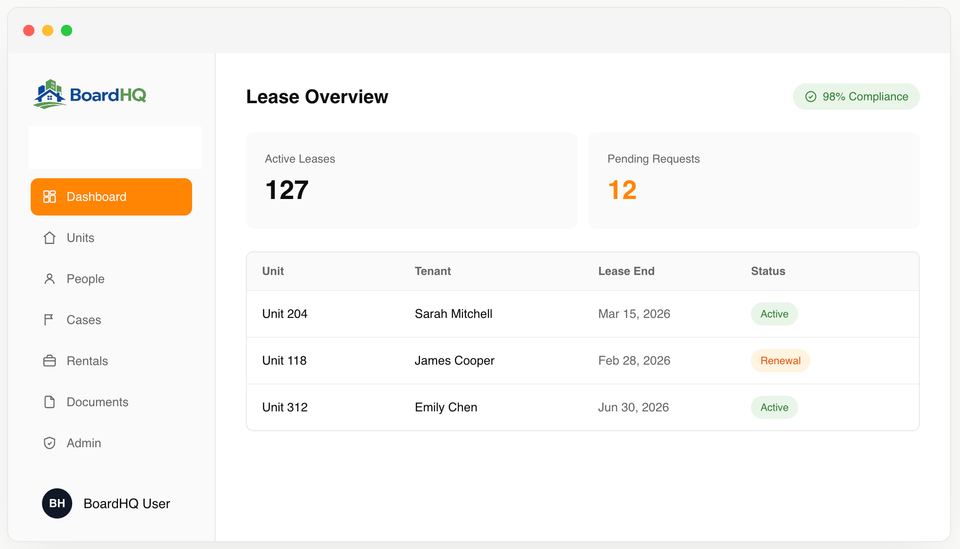
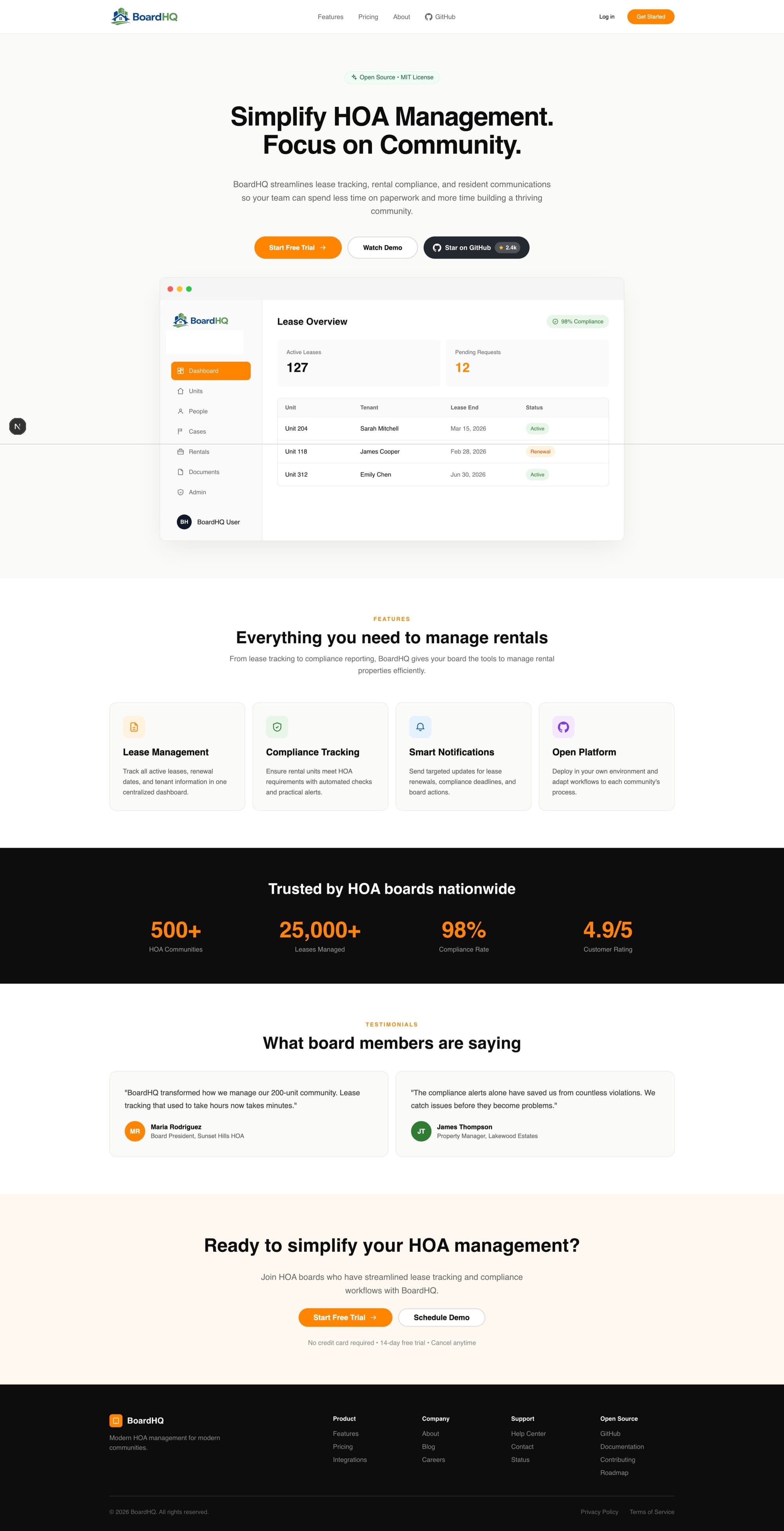
Using Pencil.dev, I designed a landing page and then asked Codex to build it out using HeroUI components. From there, I had Codex build out all the core logic with some sophisticated requirements: Clerk for authentication, OpenFGA for authorization based on user roles, Temporal for background jobs, and Mastra agent and workflow integration throughout.
The system now does things our rental management company never did proactively:
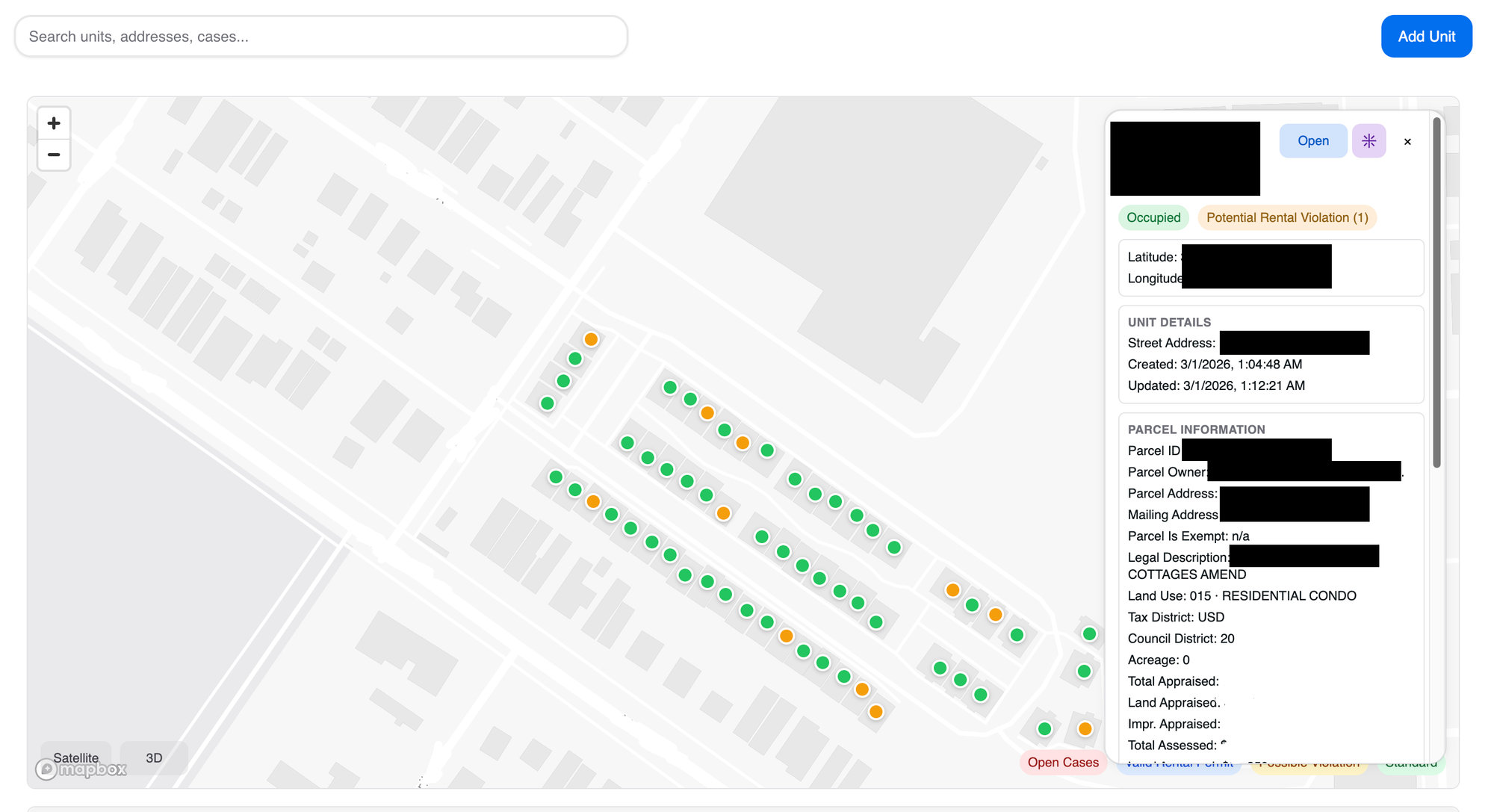
- Pulls parcel and property owner data automatically from Metro Nashville's open data portal for every unit in the system and gives me a nice way to understand it.
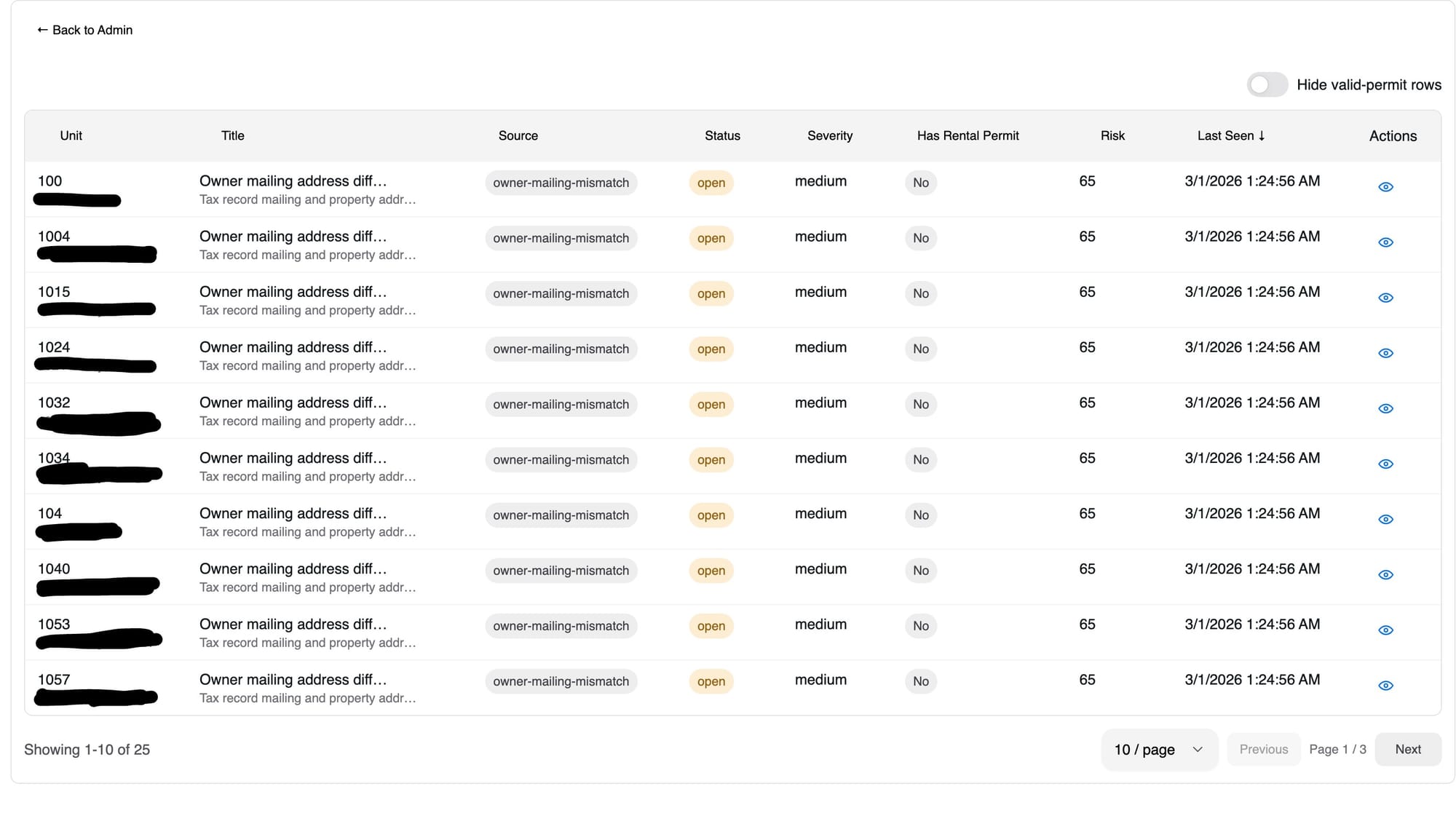
- Builds a confidence score for potential rental violations by looking for units with missing homestead exemptions, company ownership, differing mailing addresses, and several other criteria — based directly on the research methodology Claude helped me reverse-engineer from multiple renter management vendors.
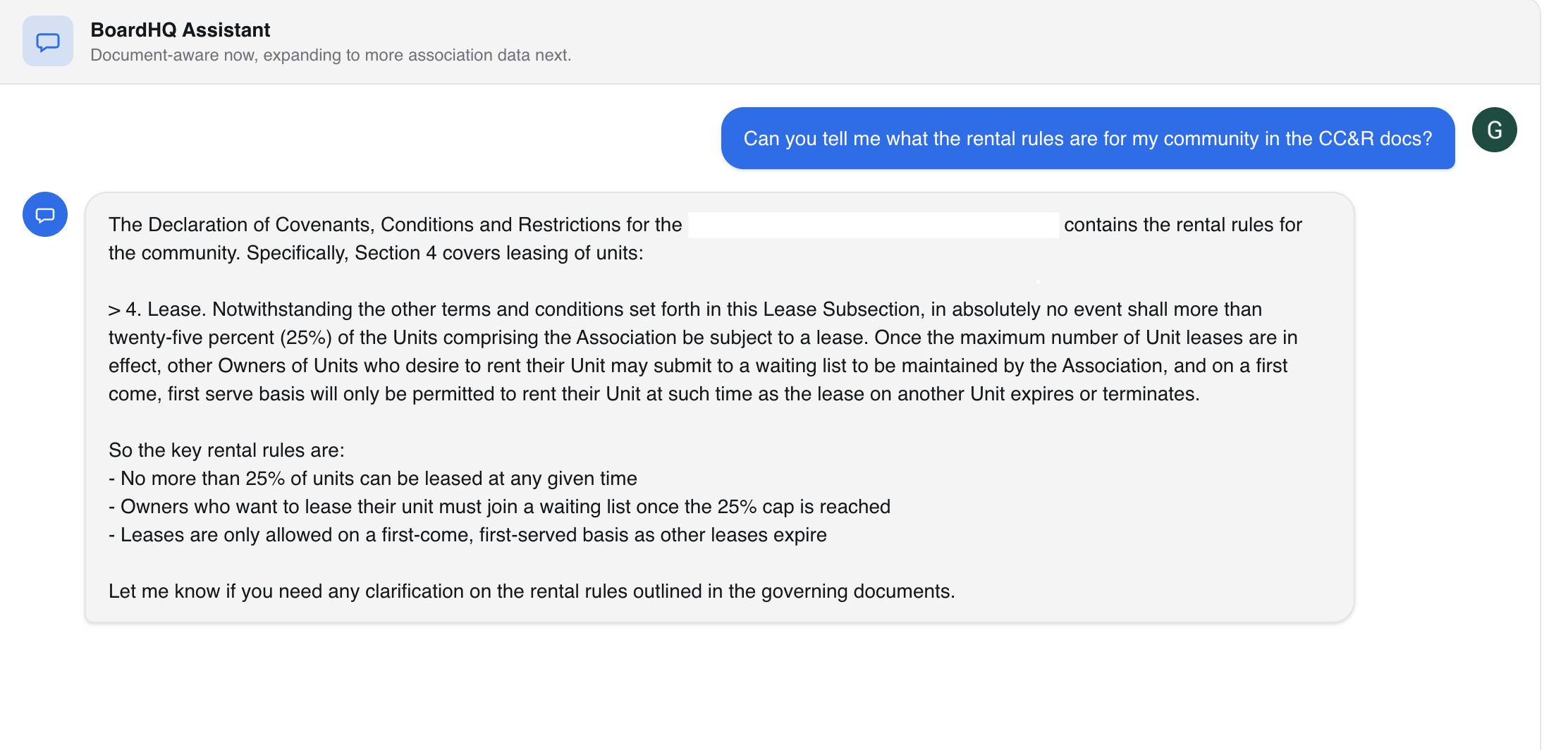
- Automatically OCRs and vectorizes uploaded documents. If the document is a lease, a Mastra agent using Claude Haiku via AWS Bedrock checks whether the lease follows the neighborhood's CC&R rules and builds a confidence score, flagging anything below 80 for board review. You can also just chat with the agent about governing docs.
- Proactively tracks lease and permit periods and sends communications to property owners and board members before anything lapses, something the original vendor never did at all.
Building this took two weekends and required writing zero lines of code.
The Caveats Matter
Here's the part I want to be honest about: no, someone without software engineering experience could not have built this. Not yet. However, it doesn't take a team of developers months to build this system either.
It did take constant steering of the agent to get the system working properly with all the open source tools. It took finding security holes the agent had introduced and correcting them. It took knowing enough about distributed systems, authentication patterns, and background job architecture to recognize when the output was wrong and redirect it. It took an understanding of AWS tools, IAM permissions, and deployments, and pushing the agent to follow best practices for email receiving from SES that wouldn't silently drop failures without retry logic.
An AI agent can write the code, and platforms like Replit are making hosting easier, but there's still something to be said for having the systems design knowledge to build a cheap, capable, and secure app. Instead of writing code, I was reviewing it, guiding it, and making judgment calls about tradeoffs.
Part of that directing was knowing where AI shouldn't be used at all. I was mindful of token costs and which parts of the system genuinely benefited from AI versus which ones didn't. At one point the agent tried to write a Playwright script to scrape Airbnb, but it became clear that Airbnb implements bot detection that would quickly eat up tokens for no data, and it's against their ToS anyway. Knowing when to pull the plug on an approach like that is still a human judgment call.
That distinction matters a lot for how you read the broader SaaS story. The other side of this coin is determining just how far tools like Cowork will entirely remove the need to write applications like this one. From my experience on this project, I wasn't able to get Claude to search Metro Nashville's property records. The agent's safeguards kicked in on privacy concerns, even when I told it I was part of the HOA. There will be limitations to what an agent will explicitly allow you to do with certain data, which honestly I'm ok with.
What This Actually Means
The trillion dollar selloff was probably too dramatic. But the underlying premise is real, and I now have firsthand evidence of it.
The businesses at immediate risk due to tools like cowork or a few technically minded individuals with codex, aren't necessarily the most obvious targets. The day one casualties are the ones whose primary value was always removing friction, where customers stayed not because the product was irreplaceable or the data unobtainable, but because switching felt like too much work. That moat has collapsed.
AI has dramatically lowered the cost of that switch. A software engineer with the right tools and a clear weekend can now compress what used to be months of development into days. The "it would cost too much to build this ourselves" calculation changes fast when "ourselves" means prompting an agent for two weekends and a $20/month subscription.
The harder question, whether AI will eventually unwind even complex integrations and proprietary data networks, is still open. There is something to be said about the boring infrastructure of trust that AI hasn't replaced yet: compliance, audit trails, SLAs, SOC 2, HIPAA. A weekend project can replicate functionality, but it can't replicate the contractual and regulatory guarantees that enterprises require. One thing we'll certainly see more business adopt though is becoming the platform that agents build on top of. Expose APIs that make their product more useful to AI workflows, not less.
The warning sign for any SaaS business isn't AI specifically. It's this: if you don't own your data, if you can't move quickly, and if your core value is a process rather than a platform, you may find yourself obsolete before your next renewal cycle. Replaced by some developer who takes on way too many side projects and enjoys a good experiment while sipping on an old fashioned.
For software engineers, the read is more optimistic in my opinion. The ability to deconstruct a problem, evaluate a value proposition, identify the right tools, understand where AI fits into the solution, and build something repeatable and maintainable, that expertise didn't go away. It got amplified. Engineers who can think clearly about systems are more valuable now, not less. The craft just looks different than it did two years ago. As Dr. Warner said at 2025 AWS re:Invent:
The next generation of builders are Renaissance Developers: modern-day polymaths who blend multiple disciplines, think systematically, and take full ownership of what they create. - Dr. Warner
Under the Hood
For the technically curious, here's the full stack:
- Development: Free trial of GPT-5.3-Codex for all coding
- AI Workflows & Agents: Mastra.AI
- Cloud Infrastructure: AWS SES, S3, Bedrock & Textract for email, document storage, OCR, embeddings, and LLM inference.
- If you're interested in trying out bedrock, I've still got some $25 re:invent credits I can give you. Just reach out! (You also get $100 credit when you create a new account)
- Frontend/Backend: Next.JS frontend, .NET 9 backend, MongoDB for storage
- Vector Storage: Qdrant
- Auth: Clerk (authentication), OpenFGA (role-based authorization)
- Background Jobs: Temporal running in a separate .NET worker process
- Landing Page: Pencil.dev